
Cardiac catheterization – in which a thin flexible tube is passed through an artery or a vein to the heart and into a coronary artery to diagnose problems in heart function and blockage – is one of the most accurate diagnostic tests available.
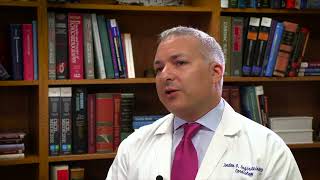
Morristown Medical Center Expands its Use of the Transradial Approach
Testing Options
Cardiac Catheterization (Angiography)
The "gold standard" for diagnosing coronary artery disease, cardiac catheterization provides live, detailed information about the heart's blood vessels, arteries, valves and chambers, allowing physicians to immediately detect blockages or abnormalities. The information is used by the cardiology specialist to determine the next step in the treatment process, which may include medication therapy, angioplasty, stenting or heart surgery. Many patients undergo same-day procedures and many can be discharged several hours after recovery.
Many of our cardiac catheterizations are now performed via the radial artery approach which minimizes recovery time and bleeding risks to the patients. Morristown Medical Center opened one of the region's first radial lounges to make the recovery experience more comfortable after this procedure.
We also perform specialized left heart catheterization, which enables doctors to measure blockage and pumping strength, and right heart catheterization (Swan-Ganz catheter), which evaluates the pressures in the right side of your heart and lungs, and your overall fluid status.
Elective Angioplasty
In addition to a cardiac catheterization, a majority of catheterization patients are scheduled for possible angioplasty. This means if a significant blockage is found during a diagnostic catheterization, it will be treated with angioplasty and stenting.
At Atlantic Health System, our physicians have diverse areas of specialization that make them ideally qualified to handle elective or complex interventional procedures, giving patients with coronary artery disease more options. In addition, those patients who require highly complex angioplasty for chronic total occlusions of coronary arteries have access to Morristown Medical Center’s rescue and recovery team with world-renowned interventional cardiologists.
Primary Angioplasty
Morristown, Overlook , Chilton and Newton medical centers are among a select group of community hospitals licensed for primary angioplasty, an emergency cardiovascular intervention for patients suffering from heart attacks. This minimally invasive procedure enables our interventional cardiology specialists to open blocked arteries and minimize heart damage, while eliminating the need for patients to be transferred to a heart surgery center.
Peripheral Vascular Procedures
Peripheral vascular catheterization is used to test for and treat blockages within the arteries of the kidneys, arms and legs. If blockages are found during the diagnostic test, our interventional cardiology specialists or vascular surgeons may elect to open the blockage. State-of-the-art technology is available at our cardiac catheterization laboratories for treatment of peripheral vascular disease, including balloons, stents, atherectomy and thrombectomy. Opening the artery will allow appropriate blood supply to flow through the artery to the necessary body part.
Interventional Radiology
Interventional radiologists perform various image-guided, minimally invasive procedures to diagnose and treat cancer, kidney disease, bladder disease and other conditions. This approach involves less risk and less pain than open surgery while promoting faster recovery.
Transesophageal Echocardiogram (TEE)
A flexible probe is passed into the patient's esophagus and stomach to capture detailed images of the heart. Performed under IV sedation, the procedure allows physicians to evaluate the heart's chambers and valves for abnormalities. A TEE may also be used to identify blood clots prior to a cardioversion.
Cardioversion
This common procedure is used to correct an abnormal heart rhythm such as atrial fibrillation and may be combined with a TEE, as explained above.
Pacemaker Implantation
Your cardiology specialist may recommend a pacemaker to keep your heart beating properly. These devices are surgically implanted in our cardiac catheterization labs and subsequently monitored by our pacemaker clinics.
Locations
-
Chilton Medical Center
-
Cardiac Catheterization Laboratory - Chilton
-
Morristown Medical Center
-
Cardiac Catheterization Laboratory - Morristown
-
Newton Medical Center
-
Cardiac Catheterization Laboratory - Newton
-
175 High Street
Newton, NJ 07860
- 973-579-8700
- Monday through Friday, 7:00am to 3:00pm
-
175 High Street
-
Overlook Medical Center
-
Cardiac Catheterization Laboratory - Overlook
Request More Information
Please use the form to request more information.
All fields are required.
Please note that this form is for North American residents only.

Radial Lounge
One of the first in the region, the newly-designed radial lounge inside Gagnon Cardiovascular Institute at Morristown Medical Center has six comfortable bays for patients and their family members. Recovering patients can walk around, help themselves to food and beverages or relax in comfortable chairs, all while being monitored via wireless telemetry.
The space is specifically designed to meet the needs of transradial catheterization patients. This type of procedure, in which a catheter is inserted into the radial (wrist) artery, is an option for many patients who need a diagnostic angiogram or have an angioplasty or stent procedure. In a traditional recovery room, these patients are confined to a stretcher and wall monitors.

Awards and Accreditations
